

Why Does Aggregate Cleanliness Matter for Concrete and Construction?
October 1, 2026
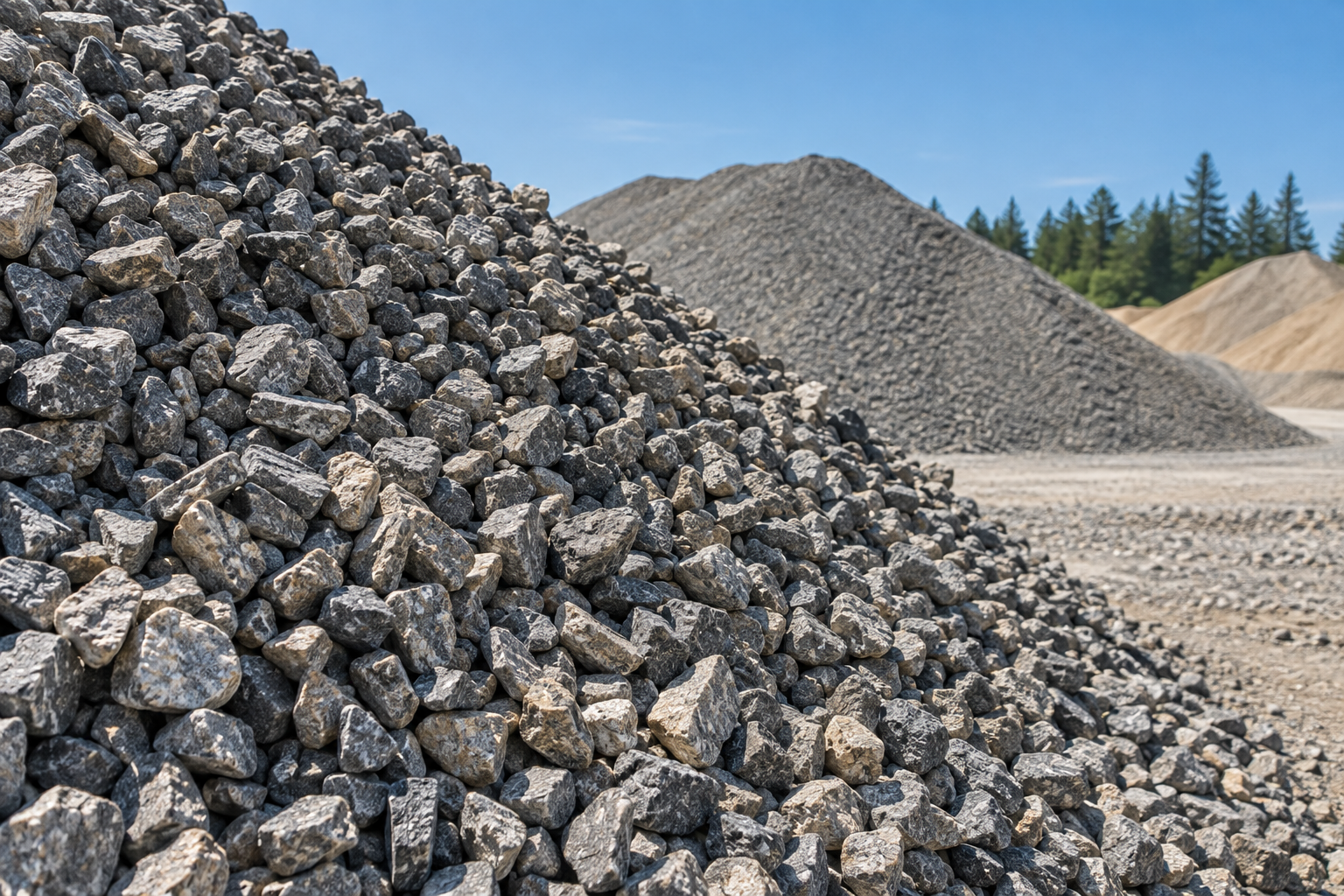
A load of aggregate can look clean at first glance while still carrying fine material that affects how it performs once it reaches a project. Clay, silt, dust, and organic material can coat the stone or settle between particles, affecting everything from the bond inside concrete to the way water moves through drain rock. Aggregate cleanliness measures how much of that unwanted material is present, with acceptable limits changing based on where the aggregate will be used. Concrete sits near the stricter end because even a thin coating on the stone can interfere with its bond to the cement paste.
What Affects Aggregate Cleanliness?
Most of the fines that affect aggregate cleanliness enter at three points, the deposit, the stockpile, and the ground beneath the finished layer. Clay seams and soil overburden sit beside usable rock in many quarries and pits, and some of that material rides into the crusher with the stone. The crusher adds its own fine dust as rock fractures, and screening separates much of it back out before the material ships.
Stockpiles and loading add a second source. A pile set directly on native ground picks up soil along its base each time a loader digs in, and runoff can carry silt across the lower edge after a storm. In a coastal climate where most of the year’s rain arrives in winter, a stockpile on a firm pad with water directed around it reaches the truck with less mud worked into its bottom layer.
Fines can also arrive after placement. Under traffic vibration and repeated wetting, soil from a soft subgrade can migrate upward into a gravel layer and fill the voids between stones, which is why gravel and geotextiles are often paired on large sites with weak ground.
How Does Aggregate Cleanliness Affect Concrete?
In concrete, aggregate cleanliness comes down to the bond between stone and cement paste, and any fines that survive processing and handling land right at that bond. Clay or dust clinging to a coarse aggregate particle keeps the paste from gripping the rock surface directly. The weak point in the hardened concrete then shifts to that thin coating, and cracks under load tend to follow the coated faces rather than pass through the stone.
Loose fines in the sand also change how much water a batch needs. Clay and silt particles carry far more surface area than sand grains, and that surface soaks up water the mix would otherwise use to stay workable. The extra water added to make up the difference thins the cement paste and lowers the compressive strength the mix can reach. Common concrete aggregate specifications cap the material passing a No. 200 sieve at a few percent of the sand’s weight, with a tighter limit for slabs that face abrasion.
How Does Aggregate Cleanliness Affect Asphalt?
Asphalt paving puts aggregate cleanliness to the same bond test, since the binder has to coat and stick to bare stone. Dust or clay on the aggregate forms a barrier between binder and rock, leaving the mix only as strong as the grip between that dust and the stone beneath it. Under traffic and wet weather, a poorly bonded surface can shed stone in a pattern called raveling, or let water strip the binder away from the aggregate.
Surplus dust absorbs binder that would otherwise hold the mix together. Each hot mix asphalt gradation, whether 3/8-inch, 1/2-inch, or 3/4-inch, is built around its own blend of coarse and fine particles. The fines in a finished mix need to be the ones that gradation calls for, rather than added dust or clay riding in on the stone.
Aggregate Cleanliness in Drain Rock and Base
For drain rock, aggregate cleanliness is a matter of open space rather than bond. Water moves through the voids between stones, and clay or silt that fills those voids slows the flow well before the layer looks clogged from the surface. Beneath a sports field or along a levee repair, drain rock keeps carrying water for as long as those gaps stay open.
Base rock works on a different principle. A road or foundation base relies on coarse stone and finer particles packing together under a roller, so some fines belong in the blend by design. The limit for base falls on clay and other plastic fines, which soften when wet and let a compacted layer shift under wheel loads, while crushed stone fines lock into place.
How Is Aggregate Cleanliness Tested?
Testing confirms aggregate cleanliness for each of those applications, since a thin clay coating is easy to miss on a damp stockpile. A washed sieve analysis rinses a sample over a fine screen and weighs what passes through, giving the share of dust and silt by weight. The sand equivalent test separates clay from sand in a settling cylinder and compares the two layers, with a higher number pointing to cleaner material.
Public road and levee work adds a documentation step on top of those tests. Third-party sampling follows state testing methods, and submittal records show how a load measured against the specification it was ordered under.
Clean Aggregate from Quarry to Placement
Every stage between the quarry face and the final layer affects aggregate cleanliness. Processing sets how clean a load starts, handling decides how much of that carries through delivery, and the application sets the limit, tight for concrete sand and drain rock and looser for a compacted base. Testing checks each stage against the specification before the material is placed.
Dutra Materials supplies sand, drain rock, base rock, and hot mix asphalt, and more than 80 percent of its production goes to publicly funded work. Request a quote to match clean aggregate to an upcoming project.