

The First Step to Any Build: Why Ground Preparation Determines Long-Term Project Success
May 8, 2026
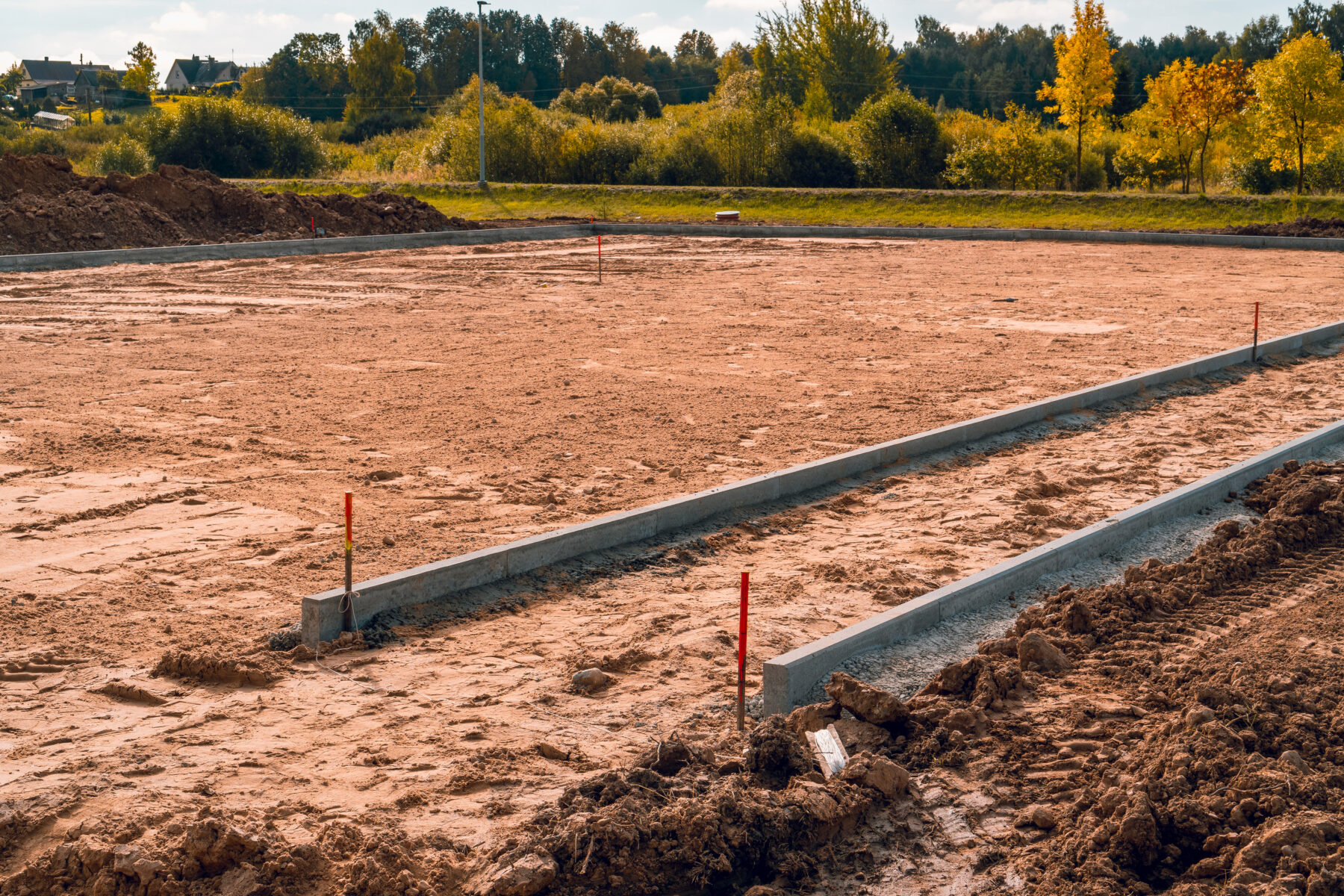
The surface a project leaves behind is only as solid as what sits beneath it. Before the first truck arrives and before any material is placed, the ground itself must be treated as a structural component. Ground preparation is where project outcomes are shaped and rushing that work introduces instability that no surface material can correct after the fact.
What the Subgrade Is Actually Doing
Subgrade is the native soil layer that every other material rests on, and its load-bearing capacity sets the ceiling for everything built above it. Soft or unstable soil migrates under repeated pressure, creating voids and uneven settlement that work their way upward through the base and into the finished surface. Thorough subgrade evaluation, including soil classification, moisture content testing, and compaction verification, establishes actual starting conditions rather than assumed ones.
When soil conditions fall short of what a project demands, engineered fill and aggregate materials are brought in to build a stable platform from the ground up. Properly graded and compacted fill raises the bearing capacity of the subgrade zone, redistributing load across a wider footprint and reducing stress concentration at any single point. The aggregate selected for this work matters as much as the placement process itself, because material with the right gradation and compaction response sets the structural tone for everything poured or laid on top.
The Role Aggregates Play in Base Construction
Crushed stone and graded aggregate bases are the transition layer between raw earth and finished surface, and the physical characteristics of those materials dictate how the base behaves under load. Angular, well-graded aggregate interlocks under compaction, creating a dense matrix that resists lateral movement and vertical deflection. Rounded or poorly graded material compacts loosely, leaving internal voids that collapse when traffic or structural weight bears down. Gradation, or the distribution of particle sizes within an aggregate blend, controls how tightly the material packs and how moisture moves through the base layer. A properly graduated blend fills voids between larger particles with progressively smaller material, tightening the internal structure without trapping water. Water that cannot escape a base layer builds pressure during freeze-thaw cycles and softens the subgrade beneath it, driving cracking and surface failure that originates well below the visible layer.
Compaction and Lift Thickness
No aggregate base reaches its structural potential without proper compaction, and compaction is not a single pass with a roller. Material placed in lifts that exceed equipment capacity compacts unevenly, leaving the lower portion of each lift under-compacted while the surface reads as complete. Lift thickness must match both the aggregate size and the compaction equipment being used, with verification through density testing at multiple points across the prepared area.
Proctor density testing measures the relationship between moisture content and compaction efficiency for a given material and hitting that target is the difference between a base that holds and one that shifts. Under-compacted sections cannot recover that lost density after the surface is placed, which is why lift-by-lift verification matters more than a final pass inspection.
Drainage as a Structural Consideration
Surface drainage is typically specified during design, but drainage at the base and subgrade level demands the same attention. Positive grade, edge drainage, and subbase permeability work together to keep water from accumulating where it creates the most structural damage. Aggregate base materials with adequate permeability carry water laterally toward drainage outlets rather than letting it saturate the subgrade below. Where conditions involve high water tables or heavy clay soils, geotextile fabrics are installed between the subgrade and aggregate base to separate the materials while still letting water pass. Without that separation, aggregate migrates into soft soil under load, degrading the base layer across successive loading cycles. The fabric acts as a boundary that preserves the gradation and density of the aggregate above it.
How Base Preparation Connects to the Finished Surface
Asphalt and concrete surfaces placed over a well-prepared base carry load the way they were specified to. Pavement placed over an unstable or poorly compacted base begins transferring stress unevenly through the surface course almost immediately, creating reflective cracking, rutting, or joint failure that shortens the service life of the entire section. The connection between base preparation and surface behavior is direct and measurable. A base that compacts uniformly and drains effectively gives the surface material a stable platform to bond with, flex with, and transfer loads from. That foundation work is what determines whether a project reaches its intended lifespan or requires costly intervention well before that threshold.